Keep your artificial lawn fresh, hygienic, and vibrant for 10+ years—with simple, low-effort cleaning routines.
Artificial grass is celebrated for being low maintenance, but "low maintenance" doesn’t mean "no maintenance." With the right tools, quick daily/weekly habits, and targeted stain solutions, you can keep your turf looking like new—even with pets, kids, or heavy use. This guide covers everything from routine upkeep to stubborn stains, teaching you how to clean artificial turf safely and effectively.
Neglecting basic cleaning doesn’t just ruin your lawn’s appearance—it shortens its lifespan:
• Debris (leaves, twigs) traps moisture, leading to mold or mildew.
• Pet urine, food spills, or pollen buildup causes odors and discoloration.
• Flattened fibers (from foot traffic) make turf look worn and unrealistic.
The good news? Turf cleaning takes just 10–15 minutes per week for most homes—no special skills or expensive equipment required.
Routine care prevents buildup and keeps turf fibers upright and fresh. Stick to this schedule for best results:
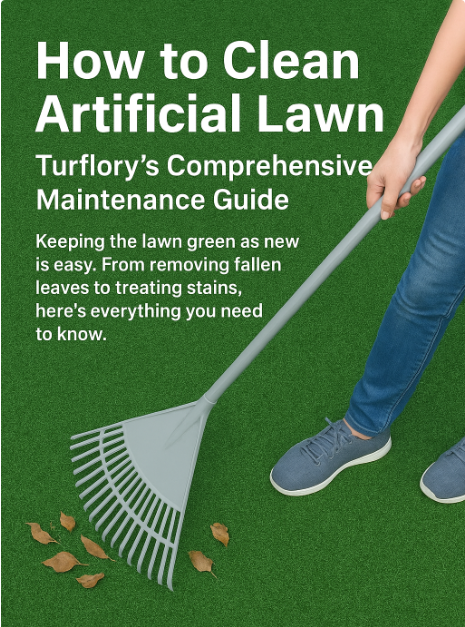
1. Remove loose debris: Use a plastic rake (metal rakes damage fibers!) to sweep leaves, twigs, and dirt. For large areas, a leaf blower (low setting) works faster—hold it 30cm above the turf to avoid blowing fibers flat.
2. Brush fibers upright: Use a stiff-bristled broom (or turf-specific brush) to comb fibers against the grain. This restores volume, prevents matting, and keeps the lawn looking natural.
3. Rinse lightly: A quick 1–2 minute spray with a water hose removes dust, pollen, and mild dirt. Focus on high-traffic areas (e.g., walkways, pet zones) or after windy days.
• Pick up pet waste immediately (solid or liquid) to avoid odors and stains.
• Remove large debris (e.g., toys, branches) that could flatten fibers or trap moisture.
For high-traffic residential spaces (e.g., backyards, play areas) that need extra durability, explore Turflory’s heavy-duty turf:
You don’t need fancy gear—these basic tools are all you need for effective turf maintenance:
• Plastic rake: Gentle on fibers, perfect for sweeping leaves and debris (avoid metal rakes—they snag or cut yarns).
• Leaf blower: Low-speed settings work for loose debris; opt for cordless models for portability.
• Stiff-bristled broom/turf brush: Restores fiber uprightness without damaging backing.
• Water hose: Adjustable nozzle (shower setting) for gentle rinsing.
• Soft-bristled brush: For scrubbing stains without scratching fibers.
• Turf-safe cleaner: Enzyme-based (for pet odors) or mild dish soap (for general stains)—avoid bleach, ammonia, or acidic cleaners (they break down turf fibers).
Turf is stain-resistant, but accidents happen. Below’s how to tackle common messes—without damaging your lawn:
Most organic spills clean up easily with water and mild soap:
1. Act fast: Blot excess liquid with a paper towel (don’t rub—this spreads the stain).
2. Rinse: Spray the area with water (shower setting) to dilute the stain.
3. Treat: Apply a small amount of mild dish soap (e.g., Dawn) mixed with water (1 tsp soap per 1L water).
4. Scrub: Gently brush with a soft-bristled brush—focus on the stain, not the surrounding fibers.
5. Rinse thoroughly: Spray until all soap residue is gone (leftover soap attracts dirt).
6. Dry: Let the area air-dry, then brush fibers upright.
For greasy stains (e.g., cooking oil): Sprinkle baking soda on the area, let sit for 15 minutes (absorbs oil), then brush away and rinse.
Turf is pet-friendly, but proper cleaning prevents bacteria and lingering smells:
1. Remove solids: Use a pooper scooper or gloved hand (disposable gloves) to pick up feces. For soft stool, use a paper towel to wipe the surface first.
2. Rinse: Spray the area with water to remove any remaining debris.
3. Disinfect (optional): For extra hygiene, apply a pet-safe enzyme cleaner (e.g., Nature’s Miracle) and let sit for 10 minutes, then rinse.
1. Rinse immediately: If possible, spray the area with water right after your pet pees—this dilutes urine and flushes it through the turf backing (prevents odor buildup).
2. Treat odors: For dried urine or lingering smells, use an enzyme-based turf cleaner (enzymes break down urine proteins that cause odors).
◦ Apply the cleaner evenly over the area.
◦ Let it sit for 15–20 minutes (don’t rinse immediately—enzymes need time to work).
◦ Rinse lightly with water and let air-dry.
For homes with pets, Turflory’s specialized Pet Turf features fast-drainage backing and anti-bacterial fibers, making cleanup even easier:
Mold grows in damp, shaded areas with trapped debris. To remove it:
1. Dry the area: Increase airflow (e.g., use a fan) or rake debris to expose the mold to sunlight (UV rays kill mold).
2. Treat: Mix equal parts white vinegar and water in a spray bottle, apply to the moldy area, and let sit for 30 minutes.
3. Rinse: Spray thoroughly with water and brush fibers upright.
4. Prevent future growth: Regularly remove debris from shaded areas and rinse occasionally to reduce moisture.
1. Freeze it: Apply an ice pack to the gum for 10–15 minutes until it hardens.
2. Scrape gently: Use a plastic scraper (or credit card) to lift the hardened gum—avoid sharp tools (they cut fibers).
3. Clean residue: Apply a small amount of rubbing alcohol to a cloth and blot the remaining residue, then rinse with water.
Every 3–6 months, give your turf a deep clean to remove accumulated dirt and refresh fibers:
1. Clear all debris: Rake or blow away leaves, twigs, and large particles.
2. Rinse thoroughly: Use a water hose (or pressure washer on low setting—keep it 50cm away from turf) to wash the entire lawn.
3. Treat stains: Spot-clean any stubborn stains (e.g., oil, rust) using the methods above.
4. Brush fibers: Use a turf brush to comb all fibers upright—this restores volume and ensures even cleaning.
5. Check drainage: Ensure water flows freely through the backing (clogged drainage leads to mold).
Turflory’s turf is engineered to make cleaning effortless, thanks to these innovative features:
• Fast-drainage backing: Water and liquids flow through quickly, preventing standing water and odor buildup.
• Non-absorbent fibers: PE/nylon blend fibers repel stains and dirt—spills don’t soak in, making cleanup faster.
• Anti-bacterial coating (Pet Turf only): Inhibits bacteria growth from pet urine, reducing odors.
• UV-resistant yarns: Resist fading and discoloration, even with regular cleaning and sun exposure.
Explore how Turflory’s solutions simplify long-term turf care:
• Place doormats at entry points to reduce dirt tracked onto turf.
• Trim overhanging trees to reduce leaf debris and increase sunlight (prevents mold).
• Avoid placing outdoor grills directly on turf (grease splatters are harder to clean—use a grill mat).
• For high-traffic areas (e.g., play equipment, pet runs), choose Turflory’s high-density turf (more durable and easier to brush upright).
Cleaning artificial grass is simple, fast, and requires no special skills—just consistent small habits and targeted solutions for messes. With Turflory’s low-maintenance turf and this guide, you can keep your lawn looking lush, clean, and hygienic for years—without the hassle of mowing, watering, or fertilizing.
Whether you’re a busy homeowner, pet parent, or commercial property manager, Turflory’s turf systems are designed to stand up to daily use while staying easy to care for. Invest a few minutes per week, and your artificial lawn will reward you with year-round beauty.