Skip the shortcut—learn the correct way to lay artificial turf over natural grass, starting with critical sod removal and base preparation for a durable, long-lasting lawn.
Installing artificial turf over existing natural grass may seem like a time-saver, but it’s a costly mistake. Directly covering real grass leads to drainage failures, uneven surfaces, odors, and premature turf damage. Turflory’s expert guide walks you through how to lay artificial turf on grass the right way—from removing old sod to building a stable base—ensuring your installation lasts 10+ years.
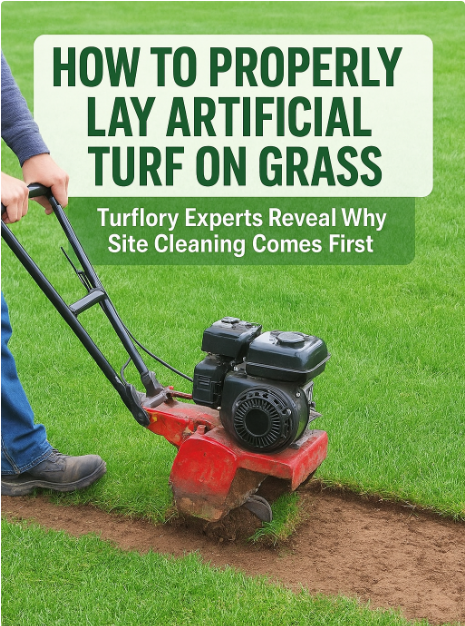
Cutting corners on ground preparation creates long-term problems that ruin your investment. Here’s what happens when you skip sod removal:
Natural grass, soil, and roots break down over time, turning the ground into a soft, unstable mess:
• Water gets trapped between the turf backing and decomposing grass, causing puddling and mold growth.
• The decaying organic matter creates bumps, dips, and sinking spots—resulting in wrinkled, warped turf that’s unsafe for walking or playing.
• Poor drainage worsens in rainy climates, leading to turf backing rot and bacterial buildup.
Grass and roots continue to decompose under the artificial turf, releasing:
• Unpleasant, musty odors (exacerbated by heat and moisture).
• Gases that lift the turf, creating gaps and loose seams.
• Surface sinking that destroys the lawn’s smooth appearance—especially problematic for high-traffic areas or pet zones.
For homes with pets, decomposition combined with pet urine creates a breeding ground for bacteria, leading to persistent odors and unsanitary conditions.
The foundation of a successful installation is a clean, stable base—and that starts with removing old grass and topsoil.
Turflory recommends using these tools to make sod removal fast and thorough:
• Sod cutter: The most efficient option (rentable for 50–100/day). It cuts uniform strips of grass and roots, ensuring clean removal without manual digging.
• Shovel & rake: For small areas or tight spaces. Use a flat shovel to pry up sod strips, then a rake to remove loose roots.
• Garden fork: Loosens compacted soil and helps lift deep roots that the sod cutter misses.
Turflory experts advise removing 2–3 inches (5–7.5 cm) of topsoil and grass. This depth:
• Creates space for the gravel base and leveling layer (critical for drainage and stability).
• Eliminates most surface roots and organic matter that cause decomposition.
• Ensures the final turf surface aligns with walkways, patios, or other hardscaping (avoids tripping hazards).
After excavation, use a rake to smooth the area and remove any remaining roots, rocks, or debris. Even small stones can create bumps in the final turf.
A properly prepared base is non-negotiable for durability and drainage. Turflory’s recommended base consists of two layers: crushed gravel and sharp sand.
The bottom layer provides structural support and drainage:
• Material: Use 3/4-inch crushed gravel (also called "road base" or "ABC stone")—it compacts tightly and allows water to flow through.
• Depth: Spread 1.5–2 inches (3.8–5 cm) of gravel evenly over the excavated area.
• Compaction: Use a plate compactor (rentable for 40–80/day) to compact the gravel until it’s firm. Test firmness by walking on it—if your foot sinks less than 1/4 inch, it’s ready.
This layer prevents sinking, eliminates drainage issues, and creates a stable foundation for the next step.
The top layer ensures a smooth, even surface for turf installation:
• Material: Use sharp sand (not play sand or beach sand)—its angular grains lock together for better leveling.
• Depth: Spread 0.5–1 inch (1.3–2.5 cm) of sand over the compacted gravel.
• Leveling: Use a 4-foot straightedge or laser level to smooth the sand, filling in low spots and scraping away high areas.
• Final compaction: Lightly compact the sand (avoid over-compacting, which reduces drainage) to create a firm, flat surface.
Add a 1–2% slope (1 cm drop per meter) away from buildings or hardscaping to ensure water drains properly.
Once the base is complete, follow these final prep steps before laying your Turflory turf:
1. Install weed barrier (optional): For extra weed protection, lay a heavy-duty geotextile fabric over the sand layer. Secure it with landscape staples (spaced 1–2 feet apart) to prevent shifting.
2. Acclimate the turf: Unroll the Turflory artificial turf over the base and let it sit for 2–4 hours (out of direct sun). This relaxes the fibers and eliminates wrinkles from packaging.
3. Align the turf: Ensure the grass blades face the same direction for a uniform, natural look. For large areas, overlap turf panels by 2–3 inches (5–7.5 cm) to trim for a tight fit.
With the base ready, it’s time to install your turf for a professional finish:
1. Trim to fit: Use a sharp utility knife to cut the turf along the edges of the installation area. Cut from the backside (where the backing is visible) for clean, straight lines.
2. Seam panels (if needed): For multiple panels:
◦ Align the edges, leaving a 1–2 mm gap to avoid overlapping.
◦ Slide seaming tape under the gap (centered) and apply turf adhesive to the tape.
◦ Press the turf edges onto the tape and weight the seam with heavy objects (e.g., buckets of sand) for 2–4 hours until dry.
1. Secure the perimeter: Use U-shaped landscape nails (6–8 inches long) to anchor the turf edges—space them 6–8 inches apart, 1 inch from the edge. Add nails every 12–18 inches in the middle of the lawn to prevent shifting.
2. Brush the fibers: Use a stiff-bristled broom or power brush to comb the grass blades upright. This fluffs the turf and hides seams for a natural appearance.
Turflory’s landscape turf is engineered to perform on properly prepared bases. For installations over former natural grass, we recommend:
• Residential Landscape Turf: Soft, realistic fibers for backyards, gardens, and play areas → Turflory Landscape Turf
• Pet-Friendly Turf: Fast-drainage backing and anti-bacterial fibers for homes with dogs/cats → Turflory Pet Turf
For expert installation guidance, project-specific quotes, or custom solutions, explore:
→ Turflory Installation Solutions
• Avoid overwatering: The base is designed to drain quickly—overwatering can loosen the gravel and sand.
• Inspect seams annually: Re-secure any loose seams with adhesive to prevent damage.
• Keep the area clean: Remove leaves and debris regularly to maintain drainage and prevent mold.
• Avoid heavy equipment: Don’t drive or park vehicles on the turf, as it can compact the base and damage fibers.
Laying artificial turf over natural grass requires patience and proper preparation, but the result is a low-maintenance, durable lawn that looks great for years. By skipping the shortcut of direct installation and following Turflory’s steps—remove sod, build a gravel-sand base, and secure the turf—you’ll avoid costly repairs and enjoy a smooth, safe, and long-lasting artificial lawn.
Turflory’s expert-engineered turf and installation guidance ensure your project is a success, whether you’re a DIY homeowner or working with a professional. Invest in proper preparation today, and your artificial turf will reward you with decades of hassle-free enjoyment.