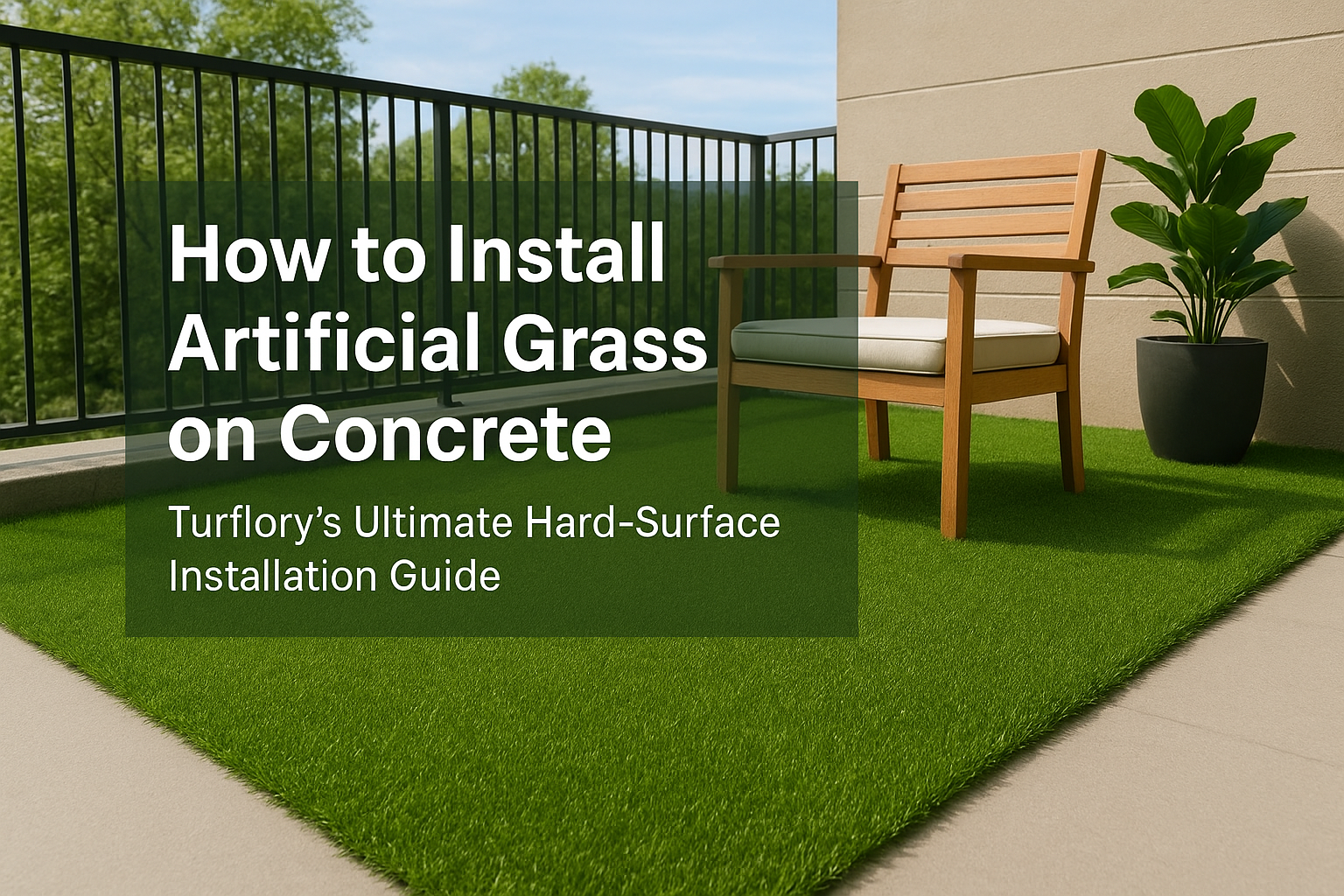
Transform your balcony, terrace, or rooftop into a refreshing green retreat—no soil required.
This step-by-step guide covers everything you need to know about installing artificial grass on concrete, from overcoming drainage challenges to choosing the right materials. Perfect for urban dwellers upgrading balconies, creating cozy leisure zones, or building functional rooftop lawns.
Concrete surfaces are durable but often feel cold, sterile, and disconnected from nature. Artificial grass solves this by:
Turn lifeless concrete balconies, terraces, or rooftops into vibrant urban greening spots. Turf adds warmth, natural color, and a sense of calm—transforming small urban areas into inviting retreats. It’s the easiest way to create a balcony lawn or terrace lawn without the hassle of soil.
A turf-covered concrete surface offers:
✅ Soft, barefoot-friendly texture (unlike hard concrete)
✅ Non-slip grip (even when wet, ideal for kids or pets)
✅ Low-maintenance functionality (no watering, mowing, or weeding)
Perfect for relaxation corners, play areas, pet runs, or outdoor dining spaces.
Turf acts as a protective layer, shielding concrete from UV damage, cracks, and weathering. It also adds mild insulation—keeping spaces cooler in summer and warmer in winter compared to exposed concrete.
Unlike soil, concrete is non-porous—so water drainage is make-or-break for turf longevity. Here’s how to address it:
Concrete surfaces must have a 1–2% slope (1–2 cm drop per meter) to direct water away from the turf and prevent pooling. To test:
• Sprinkle water on the concrete.
• If water pools in spots (more than 10 minutes after sprinkling), the slope is insufficient.
Fixes for flat concrete:
• For small areas (e.g., balconies), use a self-leveling compound to create a gentle slope.
• For large spaces (e.g., rooftops), consult a professional to adjust the surface grade.
A drainage mat (perforated, raised plastic mat) is non-negotiable in these scenarios:
• No slope (flat concrete surfaces).
• Enclosed spaces (e.g., balconies with walls on all sides, no drainage outlets).
• High-rainfall regions or rooftop installations (heavy water exposure).
Drainage mats:
• Create a gap between concrete and turf for air circulation.
• Channel water away from the turf backing (prevents mold and rotting).
• Add minor cushioning (improves comfort underfoot).
Follow these steps for a professional, long-lasting result—no prior DIY experience required:
A clean, smooth surface ensures strong adhesion between turf and concrete.
1. Clear debris: Sweep away dust, leaves, and loose material. For stubborn dirt, use a pressure washer (low setting) to avoid damaging concrete.
2. Remove stains: Treat oil, grease, or moss with a mild detergent (avoid bleach— it damages turf fibers). Scrub with a stiff brush and rinse thoroughly.
3. Repair damage: Fill cracks (larger than 3mm) with concrete caulk. Smooth uneven patches with a self-leveling compound (let dry 24–48 hours).
4. Dry completely: Allow the concrete to dry 100% (24–48 hours after cleaning/repairing). Moisture prevents adhesive from bonding.
• Drainage mat: Roll out the mat over the concrete, cutting to fit with a utility knife. Secure edges with landscape staples (or tape) to prevent shifting.
• No underlayment needed: If the concrete has a proper slope and drainage outlets, skip the mat—turf can be installed directly on clean concrete.
Choose the right installation method based on permanence and project type:
Best for balconies, terraces, or rooftops where turf will stay long-term.
1. Roll out turf to relax: Unfold the Turflory turf and let it sit for 2–4 hours (out of direct sun). This eliminates wrinkles from packaging.
2. Trim to fit: Cut the turf to match the area’s shape, leaving a 1–2cm overhang (trim later for a tight fit). Cut from the backside for clean, straight edges.
3. Apply adhesive: Use a notched trowel to spread turf-specific adhesive evenly across the concrete (cover 80–90% of the surface—avoid puddles).
4. Lay turf carefully: Roll the turf onto the adhesive, starting from one end. Use a heavy roller (or walk slowly) to press the turf down, ensuring no air bubbles or wrinkles.
5. Secure edges: Fold back 5cm of the turf edge, apply extra adhesive to the concrete, and press the edge firmly down.
Ideal for renters, temporary setups, or areas where you may reposition the turf.
1. Relax and trim turf (same as Step 3A).
2. Apply double-sided turf tape: Place tape along the perimeter of the concrete and under seams (if using multiple turf panels).
3. Lay turf: Press the turf onto the tape, smoothing out wrinkles.
4. Secure seams: Use seam tape for panel joins—align grass blades in the same direction before pressing down.
For a seamless, natural look:
1. Seam processing: If using multiple turf panels, align blades to face the same direction. Apply seam tape under the gap (centered) and press firmly. Weight the seam with heavy objects (e.g., buckets) for 2–4 hours while adhesive dries.
2. Trim overhang: Use a sharp utility knife to cut excess turf along the edges of the concrete (follow the concrete’s contour for a neat finish).
3. Brush fibers: Use a stiff-bristled broom to comb grass blades upright—this fluffs the turf and hides seams.
No—infill is not required for concrete installations. Unlike soil bases, concrete provides a stable foundation, so infill (silica sand, rubber granules) isn’t needed to keep fibers upright.
However, you can optionally add infill if:
• You want extra cushioning (e.g., for play areas).
• You need to weigh down turf on windy rooftops (prevents lifting).
• You prefer a more “natural grass” texture (infill helps blades stay upright longer).
If adding infill, use a light layer (0.5–1cm) of silica sand or Turflory’s eco-friendly infill blend—avoid overloading (it can trap moisture).
To ensure success, choose Turflory products engineered for hard surfaces:
• Residential Turf: Soft, realistic fibers for balconies/terraces → Turflory Residential Landscape Turf
• Commercial Turf: Durable, high-traffic options for rooftop bars or public spaces → Turflory Commercial Landscape Turf
• Turf-specific adhesive (waterproof, weather-resistant).
• Drainage mat (for flat/enclosed areas).
• Double-sided turf tape (temporary installs).
For project inspiration and troubleshooting, visit the Turflory Solution Library—your go-to for hard-surface installation tips, case studies, and design ideas.
• Avoid dragging heavy furniture across the turf (it can damage fibers or seams).
• Clean spills (food, pet urine) immediately with water—no harsh chemicals.
• Rinse the turf monthly to remove dust and debris (preserves drainage).
• For rooftop installations, confirm weight capacity with a professional (Turflory turf is lightweight, but add-ons like furniture or planters may require approval).
With Turflory’s guide, installing artificial grass on concrete is a simple, rewarding project—turning cold, unused spaces into vibrant, low-maintenance green areas you’ll enjoy year-round.